TPO Roofing in Shreveport, LA
Call and we will connect you with an independent local provider.
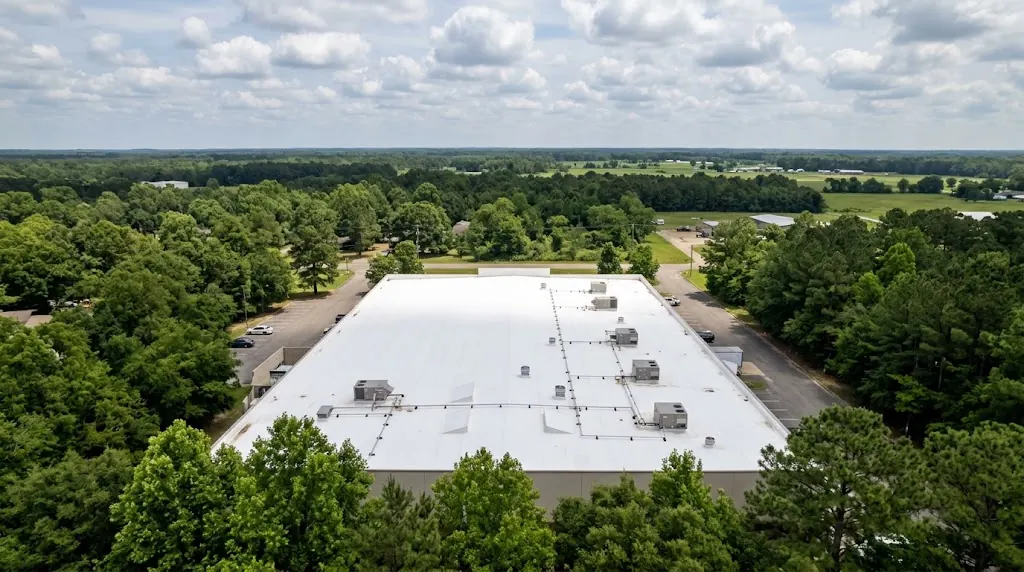
CALL NOW: (318) 287-8236Thermoplastic polyolefin, almost always called TPO, is the white sheet you see on a large share of newer low-slope roofs between the Red River and the Texas line. Shreveport Commercial Roofing Pros is a referral service operated by Recover Profits Now. We do not install roofs. Call (318) 287-8236, tell us about your building, and we will connect you with an independent licensed commercial roofing contractor who installs and repairs TPO in Shreveport, Bossier City and the surrounding parishes.
When TPO makes sense for a Shreveport building
TPO is a single-ply membrane, meaning one manufactured sheet forms the waterproof layer instead of several layers built up on site. Property managers and owners usually look at it in a few situations:
- The current roof is done. An old built-up, modified bitumen or EPDM roof with widespread leaks, soaked insulation or failing seams is a candidate for tear-off and a new TPO system.
- Cooling bills hurt. The National Weather Service office in Shreveport reports roughly 87 days a year at or above 90°F on average. A white, reflective membrane bounces back much of that sunlight instead of soaking it into the building.
- Lots of rooftop equipment. Strip centers, medical offices and restaurants often carry many HVAC curbs, exhaust fans and pipes. TPO flashings are heat-welded to the field sheet, which makes for clean, continuous details around each one.
- Budget matters. TPO usually prices in the middle of the commercial range, often below PVC and metal.
How a TPO roof system is put together
The membrane is only one piece. A complete system usually includes:
- Deck. Steel, wood or concrete. On a tear-off, rusted or rotted deck sections are replaced before anything else goes down.
- Insulation. Usually polyisocyanurate boards. Tapered boards can be cut to slope water toward drains, which is how many ponding problems get fixed.
- Cover board. A thin, dense board over the insulation that resists foot traffic and hail better than foam alone.
- Membrane. Common thicknesses are 45, 60 and 80 mil. Thicker sheets cost more and offer more material above the reinforcing scrim.
- Attachment. Mechanically fastened with plates and screws at the seams, fully adhered with bonding adhesive, or induction welded to plates beneath the sheet. Each choice affects price, wind resistance and how the roof behaves under traffic.
- Seams and flashings. Laps are fused with a hot-air welder. A good crew probes every seam the same day.
- Edge metal and terminations. Drip edge, gravel stop, coping and termination bars that hold the perimeter down when storm winds hit.
Things that go wrong with TPO
TPO is not maintenance-free. Callers in the area most often describe:
- Seams that were not fully welded, which open over time
- Punctures from dropped tools, HVAC panels or debris carried by storm winds
- Flashing failures at curbs and pipe boots where the crew rushed the details
- Water standing for days near clogged drains, especially after leaf drop or a heavy rain
- Membrane wrinkling or fluttering where fasteners have backed out
Typical TPO cost ranges
The figures below are typical ranges drawn from national cost guides, not local quotes. They include installed material and labor; tear-off and deck repair may or may not be included depending on the source. Your price depends on roof size, access, layers to remove and the details of your building. Always get a written proposal.
| Item | Typical national-guide range |
|---|---|
| TPO membrane, installed | About $4 to $14 per sq ft |
| Removing an existing roof | About $1 to $5 per sq ft extra |
| Thicker 80 mil sheet or fully adhered attachment | Toward the upper part of the range |
| Tapered insulation to correct ponding | Adds cost based on area and slope needed |
For a 15,000 square foot roof, those per-foot ranges point to a project in the tens of thousands at minimum and potentially well into six figures. That spread is exactly why an on-roof inspection matters more than any online number. See our Shreveport commercial roof cost guide for more detail.
How long a TPO project takes
Timelines are estimates and vary by contractor and season. A small office or retail roof might take a few working days once materials arrive. A large distribution building can take several weeks. Before work starts there is usually a stretch of one to several weeks for inspection, proposal, permits and material delivery. In northwest Louisiana, spring storm systems and summer pop-up thunderstorms are the usual causes of delay, and good crews only open as much roof as they can seal back up the same day.
TPO in Shreveport-Bossier: local specifics
Where you see it. TPO is common on the kinds of buildings that make up much of the area's newer commercial stock: medical office buildings near the hospital campuses on Youree Drive and Bert Kouns Industrial Loop, retail and restaurant pad sites along the main shopping corridors, and warehouses like the transit buildings at the Port of Caddo-Bossier, a riverfront industrial site of more than 2,600 acres south of Shreveport off Louisiana Highway 1.
Heat and dew. The National Weather Service office in Shreveport counts about 87 days a year above 90°F, about 32 above 95°F and about 6 above 100°F. It also notes that roughly two-thirds of pre-dawn hours here run at 90 percent relative humidity or higher. Morning dew on insulation and membrane has to dry before welding or adhesive work starts, so summer crews often begin by reading the roof surface, not the clock.
Hail. On February 11, 2024, hail up to about 3 inches was reported west of Red Chute in Bossier Parish and about 2 inches near Cross Lake, according to KSLA's summary of storm reports. A cover board under the membrane is the usual way to make a TPO roof more hail-resistant; ask whether one is in the bid.
Energy code on a tear-off. Louisiana enforces the 2021 International Energy Conservation Code statewide, effective July 1, 2023. Under that code's roof replacement provisions, a roof with insulation entirely above the deck generally has to be brought up to the current insulation requirement when it is replaced. That can mean thicker polyiso, which affects parapet flashing heights, curb heights and door thresholds. Ask the contractor what R-value the building official will expect and how the extra thickness will be detailed.
Utility programs. Shreveport-based SWEPCO runs a Louisiana Commercial Solutions program for business customers. Its published measure lists focus on HVAC, lighting and similar equipment and do not list roofing or insulation, though a custom-measure path exists. Check with SWEPCO before counting on any incentive for a reflective roof.
Questions to ask before you sign
- What membrane thickness are you proposing, and why that thickness for this building?
- Mechanically fastened, adhered or induction welded? What wind uplift rating does the assembly carry?
- Is a cover board included?
- How will you handle wet insulation or damaged deck found during tear-off, and at what unit price?
- Who probes the seams, and will I get photos of the flashing details?
- Whose warranty is it: the manufacturer's, yours, or both? What does it exclude?
- Will the tenants or business stay open during the work, and how will you protect the interior?
Checking a contractor before you sign in Louisiana
- State license on larger jobs. The Louisiana State Licensing Board for Contractors (LSLBC) requires a commercial license for commercial projects valued at $50,000 or more, counting labor and materials. Roofing falls under the board's "Roofing and Sheet Metal, Siding" subclassification of Building Construction, and a contractor may also hold the broader Building Construction classification. Ask for the license number and look it up on the LSLBC website. A contractor's name on a truck is not proof of a license.
- Small apartment buildings. For buildings used mainly as residences with up to four units, the LSLBC says roofing work of $7,500 or more requires the Residential Roofing or Residential Construction classification as of August 1, 2026. Owners of duplexes and fourplexes should ask which license covers their job.
- Permits. The LSLBC says Act 239 of 2025 requires permitting and inspection of roof construction and reroofing on residential and commercial structures for projects beginning on or after August 1, 2025. Inside Shreveport the permit comes from the city's Division of Permits and Inspections at Government Plaza; in Bossier City it comes from the Permits & Inspections Division on Benton Road. Ask the contractor to pull the permit in the contractor's name and schedule the inspections. Our guide to commercial roof permits and codes in Shreveport and Bossier City has the details.
- Insurance. Request certificates for general liability and workers' compensation, sent straight from the insurance agent, not handed over as a photocopy.
- Everything in writing. System, thickness, insulation, attachment, flashing details, how hidden damage is priced, payment schedule, warranty terms and cleanup.
Keeping a TPO roof healthy
Have the roof looked at in spring and fall and after any severe storm. Keep drains, scuppers and gutters clear. Ask HVAC technicians to use walkway pads and to take their screws and panels with them. Small seam or flashing repairs caught early are inexpensive compared with replacing soaked insulation later.
Ready to talk with a TPO installer? Call (318) 287-8236.
Call and we will connect you with an independent local provider.
CALL NOW: (318) 287-8236Frequently asked questions
Is TPO a good roof for Shreveport summers?
TPO is widely used on low-slope roofs in hot climates because the white surface reflects sunlight. Ask the contractor about membrane thickness and a cover board for long-term durability.
Can TPO go over my existing roof?
Sometimes. A recover is only an option if the deck is sound, the existing insulation is dry and the building has not reached the code limit on roof layers. Core cuts or a moisture survey answer that.
How do I know my TPO roofer is licensed?
On commercial jobs of $50,000 or more, Louisiana requires an LSLBC commercial license. Ask for the license number and check it on the LSLBC website.
Areas we serve
We connect callers across Shreveport, Bossier City, Haughton, Benton, Minden and Caddo, Bossier and Webster parishes, Louisiana, including:
- Shreveport
- Bossier City
- Haughton
- Benton
- Minden
- Greenwood
- Keithville
- Blanchard
- Stonewall
- Mooringsport
- Caddo Parish
- Bossier Parish
- Webster Parish
Local pages: Bossier City, Minden, Haughton & Benton.
Related services
- EPDM Rubber Roofing
- Modified Bitumen & Built-Up
- Commercial Metal Roofing
- Roof Coatings & Restoration
- Roof Repair & Leak Detection
Call and we will connect you with an independent local provider.
CALL NOW: (318) 287-8236