Modified Bitumen and Built-Up Roofing in Shreveport, LA
Call and we will connect you with an independent local provider.
CALL NOW: (318) 287-8236Before single-ply membranes took over, most flat roofs in the region were asphalt-based: layers of felt and hot bitumen topped with gravel, or later, factory-made modified bitumen sheets. Many of those roofs are still in service on downtown Shreveport buildings, schools, churches and older shopping centers. Call (318) 287-8236 and we will connect you with an independent licensed commercial roofing contractor who repairs and installs these systems. We are a referral service and do not perform roofing work.
Two related systems
Built-up roofing (BUR)
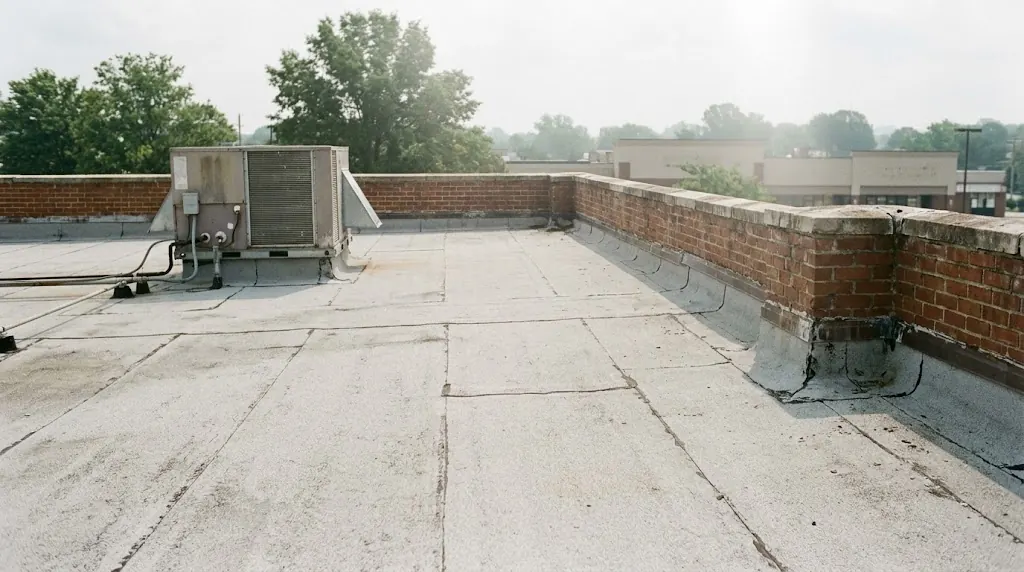
A built-up roof is made on site by alternating layers of reinforcing felt or fabric with hot asphalt or coal tar, usually three or four plies, then finishing with gravel embedded in a flood coat or a reflective coating. The redundancy is the point: if the top ply is damaged, others remain beneath it. BUR is heavy and labor-heavy to install, and working with hot kettles adds safety and odor considerations on occupied buildings.
Modified bitumen
Modified bitumen takes asphalt, blends in rubber or plastic modifiers, and ships it as rolled sheets. A typical system has a base sheet and a granulated cap sheet. Sheets are applied by torch, hot asphalt, cold adhesive or self-adhering backing. The modifiers make the sheet more flexible and tougher than plain asphalt, and the granules protect against sunlight.
When these systems are a good fit
- Roofs with heavy foot traffic, such as buildings where HVAC technicians visit often
- Repairs to an existing BUR or mod bit roof, where matching the original system is simpler
- Small or cut-up roof sections, canopies and additions where rolled goods are practical
- Owners who prefer the redundancy of a multi-ply roof
Torch, hot, cold or self-adhered?
Each method has trade-offs. Torch-applied sheets bond quickly but involve open flame, which some building owners, insurers and occupied facilities restrict. Cold-applied adhesives avoid flame and kettle fumes but need dry conditions and time to cure. Self-adhered sheets are clean and quick but are sensitive to surface preparation and temperature. Ask the contractor which method they plan and what fire-safety steps come with it, especially on buildings with wood decks or occupied spaces below.
Common problems on older asphalt roofs
- Blisters where trapped moisture or air separates the plies
- Alligatoring, a cracked surface pattern on exposed asphalt as it ages in the sun
- Bare spots where gravel has washed or blown away, leaving the asphalt exposed
- Split seams or cracks along lines of building movement
- Flashing failures at parapet walls, where base flashings dry out and pull away
- Ponding that speeds up deterioration wherever water sits
Building movement deserves a mention here. Shrink-swell clay is found in parts of northern Louisiana, though a 2021 LSU study of expansive soil risk ranked Caddo and Bossier among the less vulnerable parishes in the state. When a building does shift, roof-to-wall flashings and long runs of membrane can crack. A roofer can repair the roof, but if cracks keep returning in the same places, ask whether a structural engineer should look at the building.
Typical cost ranges
These are typical ranges from national cost guides. Sources differ widely because of how they define the system and what they include, so treat them as rough budgeting numbers only.
| System | Typical national-guide range |
|---|---|
| Modified bitumen, installed | About $4 to $16 per sq ft |
| Built-up (tar and gravel), installed | About $4 to $22 per sq ft |
| Removing existing layers | About $1 to $5 per sq ft extra |
| Gravel removal and disposal | Adds to tear-off cost |
Old BUR roofs can hide several layers and saturated insulation, and some older roofing materials may contain asbestos that requires testing and special handling before removal. Ask the contractor whether testing is needed before you budget. More context is in our cost guide.
How long it takes
A repair might be a one-day job. A full tear-off and new modified bitumen roof on a mid-size building commonly runs from several days to a few weeks of working weather, plus lead time for inspection, permits and materials. Rain stops asphalt work, and the region's frequent spring and summer thunderstorms can stretch a schedule.
Asphalt roofs in Shreveport-Bossier: local specifics
Downtown Shreveport. The Shreveport Commercial Historic District, listed on the National Register and roughly bounded by Commerce, Crockett, Common and Travis streets, holds commercial buildings from the late 1800s through the 1940s, including Art Deco designs. Buildings of that age and style typically have flat roofs behind brick parapets, often with several generations of built-up or modified bitumen roofing stacked up. Core cuts to count layers are routine before pricing a tear-off. The MPC's Historic Preservation Commission also reviews work in the downtown historic district, so ask whether your project needs a certificate of appropriateness.
Plan review for larger jobs. The City of Shreveport's permit guide says large or complex commercial projects are reviewed by the State Fire Marshal, which it estimates takes about three weeks. Build that into the schedule for a big re-roof.
Torch work on older buildings. Many older downtown and church buildings have wood decks or wood framing under the roof. Ask whether a flame-free method suits your building, and what fire watch the crew will keep.
Rain calendar. The Weather Service's Shreveport climate summary puts May and June as the wettest months, each averaging more than 5 inches, with August the driest at under 3 inches. Asphalt work stops in rain, so a late-summer or fall start often loses fewer days.
Questions to ask
- How many plies are you proposing, and what is the cap sheet?
- Torch, hot mop, cold adhesive or self-adhered, and why?
- Will you core the existing roof to count layers and check for wet insulation?
- Is asbestos testing needed before tear-off?
- How will you protect the interior from odor and fumes during work hours?
- Would a reflective coating over the cap sheet make sense for cooling?
Checking a contractor before you sign in Louisiana
- State license on larger jobs. The Louisiana State Licensing Board for Contractors (LSLBC) requires a commercial license for commercial projects valued at $50,000 or more, counting labor and materials. Roofing falls under the board's "Roofing and Sheet Metal, Siding" subclassification of Building Construction, and a contractor may also hold the broader Building Construction classification. Ask for the license number and look it up on the LSLBC website. A contractor's name on a truck is not proof of a license.
- Small apartment buildings. For buildings used mainly as residences with up to four units, the LSLBC says roofing work of $7,500 or more requires the Residential Roofing or Residential Construction classification as of August 1, 2026. Owners of duplexes and fourplexes should ask which license covers their job.
- Permits. The LSLBC says Act 239 of 2025 requires permitting and inspection of roof construction and reroofing on residential and commercial structures for projects beginning on or after August 1, 2025. Inside Shreveport the permit comes from the city's Division of Permits and Inspections at Government Plaza; in Bossier City it comes from the Permits & Inspections Division on Benton Road. Ask the contractor to pull the permit in the contractor's name and schedule the inspections. Our guide to commercial roof permits and codes in Shreveport and Bossier City has the details.
- Insurance. Request certificates for general liability and workers' compensation, sent straight from the insurance agent, not handed over as a photocopy.
- Everything in writing. System, thickness, insulation, attachment, flashing details, how hidden damage is priced, payment schedule, warranty terms and cleanup.
Want an asphalt roof inspected or priced? Call (318) 287-8236.
Call and we will connect you with an independent local provider.
CALL NOW: (318) 287-8236Frequently asked questions
Is modified bitumen better than TPO?
Neither is better everywhere. Modified bitumen is tough under foot traffic and multi-layered; TPO is lighter, reflective and heat-welded. A contractor can compare both for your building.
Can a tar and gravel roof be repaired?
Often. Blisters, bare spots and flashing failures can be repaired if the insulation is dry. Widespread saturation usually means replacement.
Are torch-applied roofs safe?
Torch work involves open flame, so ask the contractor about fire-safety procedures, fire watch and whether a flame-free method suits your building better.
Areas we serve
We connect callers across Shreveport, Bossier City, Haughton, Benton, Minden and Caddo, Bossier and Webster parishes, Louisiana, including:
- Shreveport
- Bossier City
- Haughton
- Benton
- Minden
- Greenwood
- Keithville
- Blanchard
- Stonewall
- Mooringsport
- Caddo Parish
- Bossier Parish
- Webster Parish
Local pages: Bossier City, Minden, Haughton & Benton.
Related services
- TPO Roofing
- EPDM Rubber Roofing
- Commercial Metal Roofing
- Roof Coatings & Restoration
- Roof Repair & Leak Detection
Call and we will connect you with an independent local provider.
CALL NOW: (318) 287-8236